WSJF Agile Çerçevesi
Weighted Shortest Job First (WSJF), gecikme maliyeti ile iş boyutu arasında denge kurarak işleri önceliklendirmenize yardımcı olur. Bu çerçeve, hızla değişen ortamlarda sınırlı kaynaklarla maksimum değer sunar.
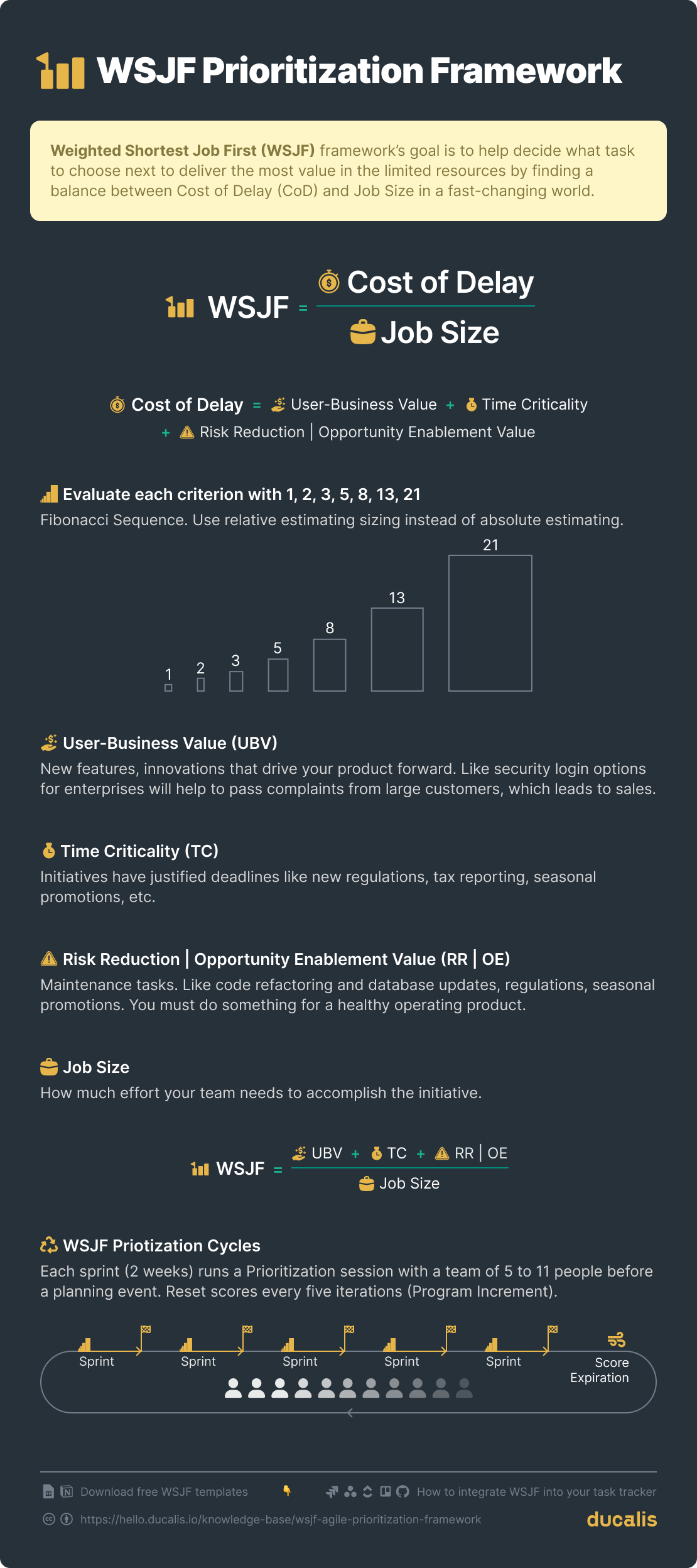
Özetle WSJF önceliklendirme
Ücretsiz bir Ducalis hesabı oluşturun
WSJF hesaplama
WSJF puanı = (İş Değeri + Zaman Kritikliği + Risk Azaltma) / İş Boyutu
Kriterler
Kullanıcı/İş Değeri, işleri kullanıcılar için önem ve potansiyel gelir etkisine göre sıralar.
Zaman Kritikliği, işleri aciliyete göre sıralar—değerin zaman içinde nasıl azaldığı veya gecikme nedeniyle kaç müşteri kaybedebileceğiniz.
Risk Azaltma ve Fırsat Yaratma, doğrudan gelir getirmeyen ancak uzun vadeli sonuçlara fayda sağlayan işleri öne çıkarır. Bazı çözümler teknik veya yasal riskleri ortadan kaldırır ve daha sonra tasarruf sağlar.
İş Süresi (hikaye puanları, özellik puanları, efor veya göreceli boyut olarak da adlandırılır) uygulama karmaşıklığını ölçer. Bu tahminde daha küçük sayılar daha iyidir.
Değerlendirme
-
Her kriteri Fibonacci ölçeğinde değerlendirin: 1 (etki yok), 2, 3, 5, 8, 13, 21 (en yüksek etki).
-
Beş ila on bir kişilik ekiplerle işbirlikçi önceliklendirme oturumları düzenleyin.
-
Her iterasyon planlama etkinliğinden (sprint) önce görevleri değerlendirin.
-
Farklı puanları takım arkadaşlarınızla tartışarak normalleştirin.
-
'21' ve '13' İş Boyutlarına sahip girişimleri daha küçük projelere bölün (iş listesi iyileştirmesi).
-
Hızla değişen ortamı yansıtmak için değerlendirme puanlarını her beş iterasyonda (Program Artışı) sıfırlayın.
Kullanıma hazır Ducalis önceliklendirme şablonunu uygulayın
Kriter, formül ve ölçekleri özelleştirmenize gerek yok. Bunları toplantıyı başlatmak için şablon olarak kullanın.
WSJF sadece bir formül değil—işletmeler için kapsamlı bir iş akışı çerçevesinin parçasıdır. Asıl sihir, karar verme yaklaşımınızı değiştirdiğinizde gerçekleşir: işbirlikçi önceliklendirme oturumları düzenleyin, puan süre sonu belirleyin, kriterleri tanımlayın ve görev açıklamalarını takım arkadaşlarınıza açıklayın. Bu makale, bu önceliklendirme alışkanlığını oluşturmak ve düşünce tarzınızı değiştirmek için araçlar sunar.
WSJF tanımı
WSJF, Weighted Shortest Job First anlamına gelir—göreli Gecikme Maliyetini (CoD) ve iş boyutunu (süre için bir vekil) hesaplayarak iş listelerini önceliklendirmek için bir önceliklendirme çerçevesidir. CoD, bir toplam olarak hesaplanır: Kullanıcı/İş değeri + Risk Azaltma ve Fırsat Yaratma + Zaman Kritikliği. SAFe metodolojisinin bir parçasıdır.
İş listesi öncelikleri, WSJF öncelik puanlarına göre sürekli güncellenir. Çerçeve, Lean ekonomisinin temel ilkesi olan batık maliyetleri uygun ve otomatik olarak göz ardı eder.
Akış tabanlı bir sistemde, öncelikleri güncellemek için sürekli görev önceliklendirme, aşağıdakiler için en iyi ekonomik sonuçları sağlar:
- Hızlı kazançları öne iterek iş sıralaması
- Yatırılan kaynakları düşürürken en yüksek finansal sonuç dengesi
- Hızla değişen ortamı yansıtmak için CoD ve İş Boyutlarının düzenli güncellenmesi
SAFe nedir?
ScaledAgile.com'a göre Scaled Agile Framework (SAFe), Agile, Lean ve DevOps uygulamalarını ölçekte uygulama sistemidir. Agile ürün teslimatından en iyi fikirleri alır ve bunları tüm işletmeye yayarak iş çevikliği sağlar. SAFe, önde gelen işletmeler için en popüler çerçevedir çünkü işe yarar: güvenilir, özelleştirilebilir ve sürdürülebilirdir.
Sürekli güncellenir ve sürümleri vardır. 2022'de en son sürüm 5.1'dir ve SAFe, işletmenin yedi ana alanını kapsar:
- Takım ve Teknik Çeviklik
- Agile Ürün Teslimatı
- İşletme Çözümü Teslimatı
- Lean Portföy Yönetimi
- Organizasyon Çevikliği
- Sürekli Öğrenme Kültürü
- Lean-Agile Liderlik
Vaat edilen sonuçlar:
- +%50 daha hızlı piyasaya sürme
- +%50 hata azaltma
- +%35 verimlilik artışı
- +%30 daha mutlu, daha bağlı çalışanlar
Bu makalede, temele—WSJF karar verme çerçevesine odaklanacağız.
Ücretsiz WSJF şablonunu indirin:
WSJF nasıl hesaplanır
WSJF formülü
Weighted Shortest Job First (WSJF) çerçevesi, hızla değişen bir dünyada Gecikme Maliyeti (CoD) ve İş Boyutu arasında denge bularak sınırlı kaynaklarla en fazla değeri sunmak için hangi görevi seçeceğinize karar vermenize yardımcı olur.
WSJF puanını hesaplayın
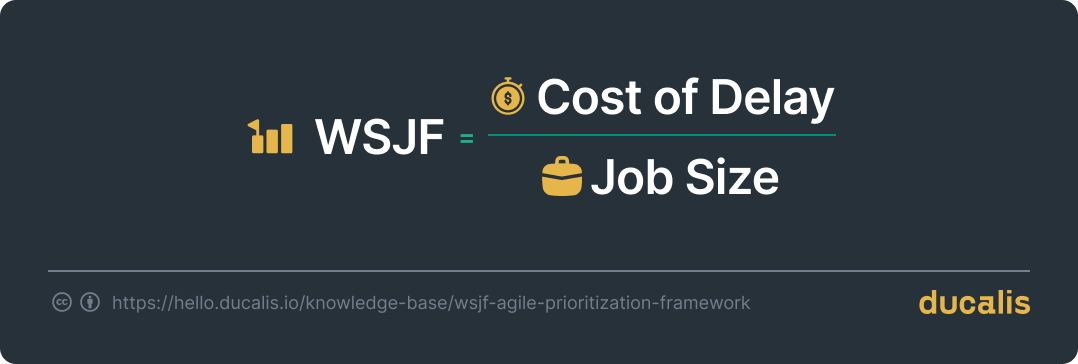
WSJF Puanı = Gecikme Maliyeti / İş Boyutu
İzlemeniz gereken üç tür ürün geliştirme sorununu tanımlayan CoD'yi hesaplayın.

Gecikme Maliyeti = Kullanıcı-İş Değeri + Zaman Kritikliği + Risk Azaltma | Fırsat Yaratma Değeri
Her kriteri 1, 2, 3, 5, 8, 13, 21 ölçeğiyle değerlendirin.
Tahmin ilkeleri:
-
WSJF tahmini, belirsizlik düzeyini anlamayı amaçlar, saat veya para hesaplama değil (ki bu neredeyse imkansızdır). Bu nedenle belirli bir görevi tamamlamak için tam süre yerine olasılığı tahmin ederiz. Buna göreceli değerlendirme denir.
-
Ana hedef her iterasyonda değer sunmak olduğundan, dizinin ortancası "bir iterasyon" olacaktır.
-
Bir iterasyon = iki hafta. Planlama temelimiz. İki haftalık bir iterasyon için hikaye puanı sayılarını hesaplıyoruz.
-
Program Artışı (PI) = beş iterasyon (on hafta). SAFe'ye göre PI, bir Agile Release Train'in (ART) çalışan, test edilmiş yazılım ve sistemler biçiminde artımlı değer sunduğu bir zaman kutusu. Tüm ekip, ürün için büyük bir şey gerçekleştirir. Başka bir deyişle, organizasyon büyük bir güncelleme yayınlar ve ardından iş listelerini yeniden değerlendirmeli, düşünmeli ve öncelikleri bir kez daha tartışmalıdır.
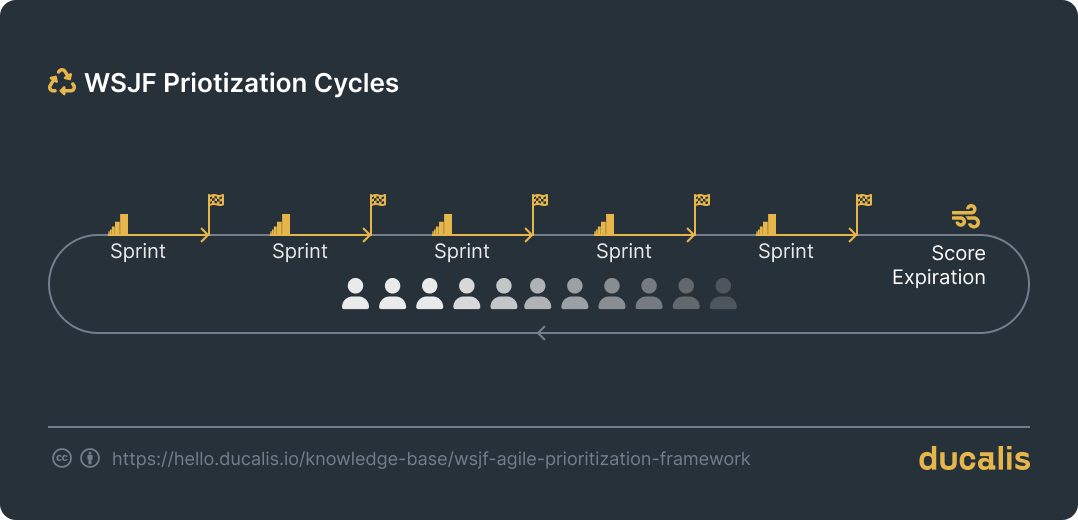
Bu sadece bir öneridir ve yaklaşımı ekibiniz için rahat olacak şekilde özelleştirebilirsiniz. Bu makalenin ilerleyen bölümlerinde, kriterleri iş ihtiyaçlarınıza göre daha iyi anlama ve özelleştirme konularını ele alıyoruz.
Kullanıcı-İş Değeri (UBV)
Ürününüzü ileriye taşıyan yeni özellikler ve yenilikler. Örneğin, kurumsal güvenlik giriş seçenekleri, büyük müşterilerden gelen şikayetleri önlemeye yardımcı olur ve bu da satışlara yol açar.
Kullanıcı/İş değeri (UBV), işlerinizi kullanıcı için göreceli önemlerine (Arzu Edilebilirliği Önceliklendirme) ve gelir üzerindeki potansiyel etkilerine (Finansal Önceliklendirme) göre sıralar. Bu noktada, bu çözümün North Star Metriğinizi tanıtmakta ne kadar etkili olduğunu tahmin edersiniz. Birçok faktör UBV'yi etkileyebileceğinden, iş etkisi hakkında düşünmeye başlayın ve her şeyin yolunda gideceğine dair güveninizi artırın.
Cevaplanması gereken sorular: Güncelleyebileceğiniz hayati bir ürün metriği nedir? Bu kullanıcılar için ne kadar önemli? Gelir üzerindeki etkisi nedir?
Fibonacci dizisiyle Kullanıcı-İş Değeri değerlendirmesi
- 1 puan: hiçbir kullanıcı-iş değeri yok; bu görev başka bir şeyle ilgili
- 2 puan: en düşük iş etkisi ve güven
- 3 puan: düşük iş etkisi ve güven
- 5 puan: orta düzeyde iş etkisi, orta güven
- 8 puan: yüksek iş etkisi ve güven
- 13 puan: çok yüksek iş etkisi ve güven
- 21 puan: en yüksek iş etkisi ve güven
Zaman Kritikliği (TC)
Aciliyeti değerlendirin. Girişimlerin yeni düzenlemeler, vergi raporlaması, mevsimsel promosyonlar gibi gerekçeli son tarihleri vardır.
Zaman Kritikliği, işleri aciliyete göre sıralar. Değerin zaman içinde nasıl azalacağını veya oyalanırsanız kaç müşteri kaybedebileceğinizi tahmin edersiniz.
Tahmin zaman çerçevemiz bir iterasyondan (iki hafta) bir Program Artışına (PI) (on hafta) kadardır. Her PI döngüsünde, yeni bir yeniden değerlendirme oturumu düzenleriz (puan süre sonundan sonra) ve aciliyetin nasıl değiştiğine karar veririz.
Cevaplanması gereken sorular: İş için ne kadar acil? Kullanıcılar bekler mi yoksa başka bir çözüme mi geçer? Sabit bir son tarih var mı?
Fibonacci dizisiyle Zaman Kritikliği değerlendirmesi
- 1 puan: hiç zaman kritik bir görev değil
- 2 puan: bir sonraki tahmin döngüsüne (her beş iterasyonda puan süre sonundan sonra) kadar bekleyebilir
- 3 puan: dört sprint (yaklaşık sekiz hafta) bekleyebilir
- 5 puan: orta aciliyet, üç sprint (yaklaşık altı hafta) bekleyebilir
- 8 puan: iki sprint (yaklaşık dört hafta) bekleyebilir
- 13 puan: bir sprint (yaklaşık iki hafta) bekleyebilir
- 21 puan: en yüksek aciliyet, o konuyu bir sonraki sprint'e almanız gerekir
Risk Azaltma | Fırsat Yaratma Değeri (RR | OE)
Teknolojik veya iş risklerini önlemek veya azaltmak için görevler. Örnekler arasında kod yeniden düzenleme, veritabanı güncellemesi, güvenlik veya vergi denetimi bulunur—bir ürünün sağlıklı çalışmasını sağlamak için yapmanız gereken bir şey.
Risk Azaltma ve Fırsat Yaratma, hemen gelir getirmeyen ancak uzun vadede fayda sağlayan işleri vurgulamanıza yardımcı olur. Bazı çözümler teknik veya yasal riskleri ortadan kaldırır ve size daha sonra para kazandırır. Diğerleri, potansiyel müşteri sayısını önemli ölçüde artıracak daha fazla iyileştirme için kapıları açabilir.
Cevaplanması gereken sorular: Görev bir risk açıklamasıyla başlıyorsa, o riskin etkisi ne kadar büyük? Olasılığı nedir?
Fibonacci dizisiyle Risk Azaltma değerlendirmesi
- 1 puan: hiçbir risk azaltma sağlamıyor
- 2 puan: en düşük risk, en düşük şiddet olasılığının olasılığını azaltır
- 3 puan: düşük risk, düşük şiddet olasılığının olasılığını azaltır
- 5 puan: orta risk orta şiddet olasılığının olasılığını azaltır
- 8 puan: orta-yüksek risk, yüksek şiddet olasılığının olasılığını azaltır
- 13 puan: çok yüksek risk, çok yüksek şiddet olasılığının olasılığını azaltır
- 21 puan: çok etkili bir olayın, meydana gelme olasılığı en yüksek olan bir felaketin riskini azaltabilir
İş Boyutu (İş Süresi)
İş Boyutu, tek olumsuz faktördür ve işleri gerçekleştirme karmaşıklığına göre sıralar. Gereken kişi-saat maliyetlerini dikkate almadan en yüksek yatırım getirisini elde etmek imkansızdır. Süre, hikaye puanları, özellik puanları, efor veya göreceli boyut olarak da adlandırılır.
Cevaplanması gereken sorular: Uygulama ne kadar sürecek? Daha fazla zaman alıcı hale getirebilecek bağımlılıklar var mı?
Fibonacci dizisiyle İş Boyutu değerlendirmesi (hikaye puanları)
- 1 puan: hiçbir çaba gerekmez. Sıfıra bölemeyiz, bu nedenle İş Boyutu tahmini 1'den başlamalıdır.
- 2 puan: tahmin temeli. İki haftalık bir iterasyon için %80 olasılıkla bir günün kodlamak ve bir günün test edip doğrulamak için yeterli olduğu.
- 3 puan: sprint çabalarınızın yaklaşık dörtte biri olan bir görev
- 5 puan: iterasyonunuzun yarısı olan bir şey. İki haftalık bir iterasyon için %80 olasılıkla görevin kodlanmak için 5 iş günü ve test edip doğrulamak için bir gün alacağı.
- 8 puan: %80 olasılıkla bir görevin iki hafta içinde (bir iterasyon/sprint) geliştirilip test edileceği
- 13 puan: bir ile iki iterasyon arasında
- 21 puan: "Buzz Lightyear tahminleri", iki sprint veya daha fazla süren bir şey ("sonsuza ve ötesine"). Ekiplerle çalışma konusundaki pratik deneyimimden, bir iterasyonu aşan ve daha küçük parçalara bölünmesi gereken birçok fikir değerlendireceğiniz.
WSJF puanını hesaplamak için nihai formül:
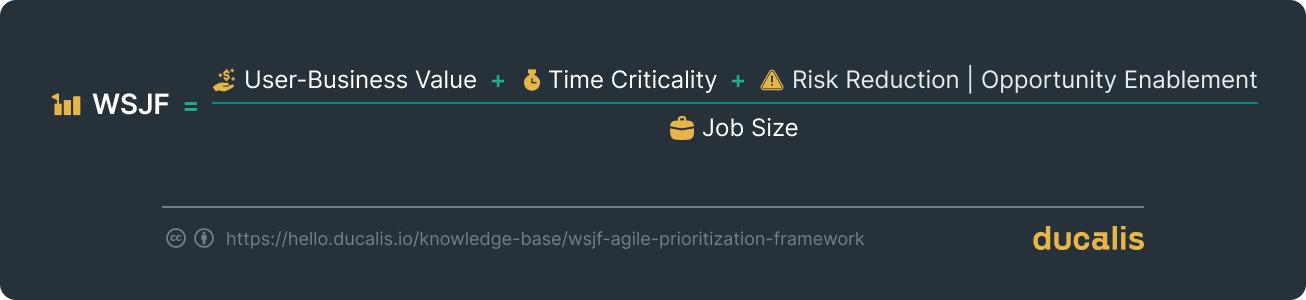
WSJF puanı = (İş Değeri + Zaman Kritikliği + Risk Azaltma | Fırsat Yaratma) / İş Boyutu
Ekibiniz için kriterleri özelleştirin
Standart Scrum çerçevesinde, her ekibin hikaye puanı tahmini—ve bunun sonucundaki hız—yerel ve bağımsız bir konudur. İşte değerlendirme süreciniz için bir başlangıç noktası. Bunu Ducalis WSJF şablonundan uygulayabilir ve kriter açıklamalarını değiştirebilirsiniz.
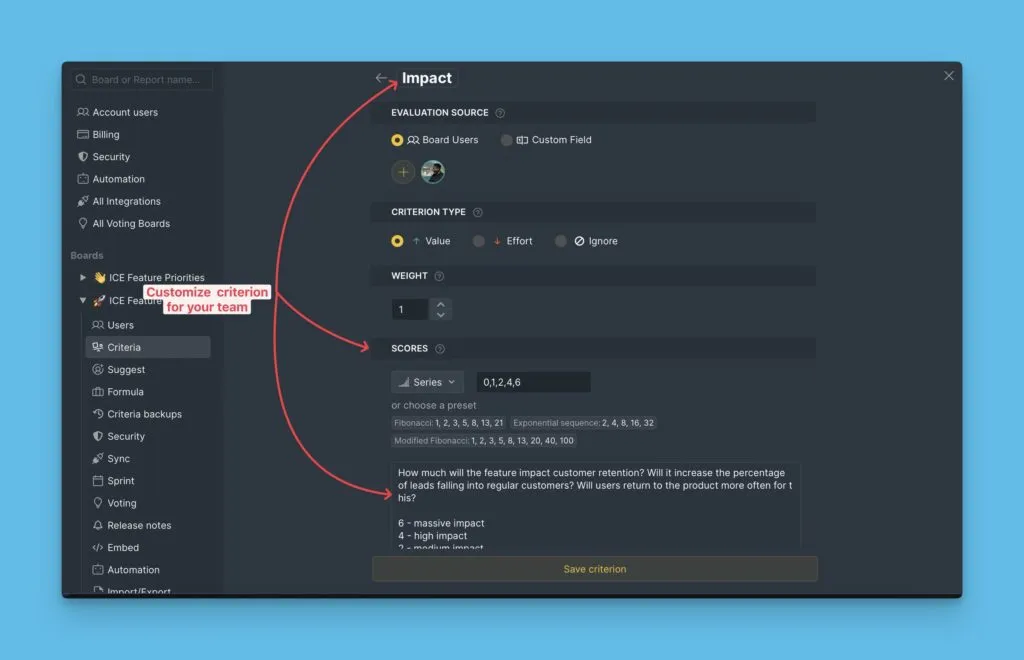
Bir ölçek için tek bir doğru tanım yoktur. Siz ve ekibiniz herhangi bir terim hakkında kafanız karıştıysa—değiştirin! Ducalis bu konuda oldukça esnektir.
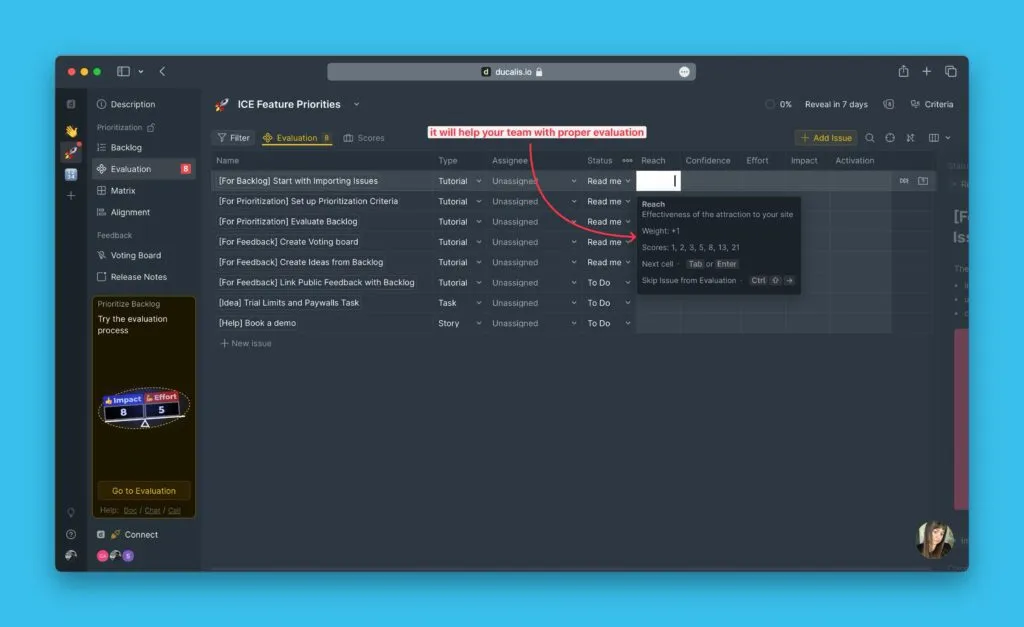
İterasyonlar
Agile süreçlerinin özü, iterasyon veya sprint olarak adlandırılan temel yapı taşlarıdır. Her iterasyon, Agile Takımlarının artımlı değer sunduğu standart sabit uzunlukta bir zaman kutusudur.

İterasyon planlama etkinliği (Ürün Artışı)
Her iterasyon net bir öncelikler listesiyle başlamalıdır. O planlamadan önce değerlendirilmiş bir iş listeniz olmalıdır. Ekipler genellikle değerlendirme, önceliklendirme ve planlama için geliştirme döngüleri arasında tüm haftayı harcayabilir. Ardından, kısa iterasyonlarda (sprint'ler) değer sunun.
Ducalis, asenkron bir değerlendirme süreci aracılığıyla ekibiniz için o tüm haftayı tasarruf edebilir. Bir planlama günü belirleyin ve Ducalis gerisini yapsın. Ekibin değerlendirme ilerleme raporuyla değerlendirme ilerlemesini takip edebilirsiniz.
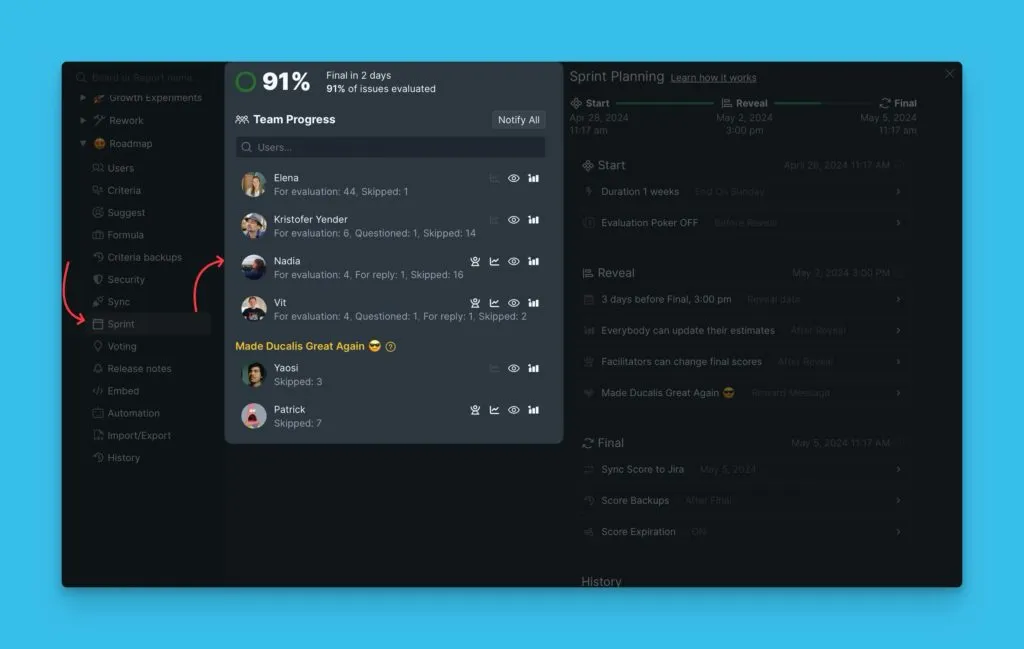
Takım arkadaşlarınızı zamanında değerlendirmeye motive etmek için teşvik edici mesajlarla destek sunun. Önceliklendirme alışkanlığı ayarlarına gidin ve yaklaşan iterasyon planlama toplantısından önce değerlendirmelerini zamanında bitiren takım arkadaşları için ödüllendirici bir mesaj ayarlayın.
Yeniden değerlendirmenin gücü
En yüksek öncelikler, aciliyet ve iş değerleri çabuk bozulan ürünlerdir. Yeni müşteri talepleri, hatalar, teknik borçlar, yeni düzenlemeler, havalı fikirler ve çok daha fazlası gibi çok fazla girdi var.
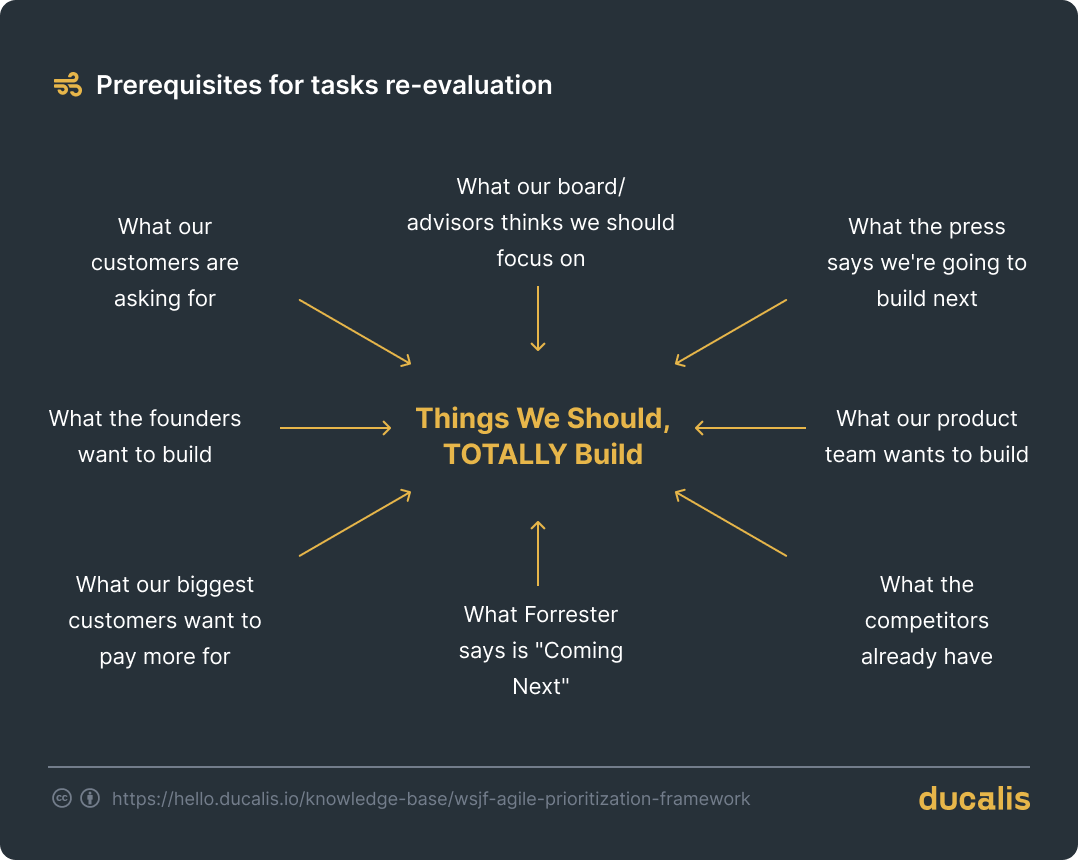
SAFe'nin tüm fikri, hızla değişen bir dünyaya yeni bir şekilde adapte olmaktır. Bir şirketin ortamı her beş iterasyonda (bir PI) değişir. Bu nedenle, değerlendirme puanlarının sıfırlanması şiddetle tavsiye edilir.
Akış tabanlı bir sistemde, öncelikleri sürekli güncellemek en iyi ekonomik sonuçları sağlar. Teorik, bireysel iş yatırım getirisi yerine iş sıralaması, böyle bir akış bağlamında en iyi sonucu üretir.
İş listesi yeniden değerlendirmesinin yan yararı, iş listesi temizliği/iyileştirmesidir. Her iş listesi öğesi hakkında düşünürken, bazı bilgiler bir nedenle güncelliğini yitirdiği için görevinizi birleştirme, güncelleme veya kaldırma konusunda bazı fikirler edineceksiniz. hi.ducalis.io'ın deneyiminden, her yeniden değerlendirme döngüsünde iş listesi öğelerimizin %2 ila %5'ini kaldırıyoruz.
Yeniden değerlendirme döngülerini ayarlamak için:
- Meeting in # days (# Gün İçinde Toplantı) üzerine tıklayın.
- Puan süre sonu bölümüne ilerleyin.
Varsayılan olarak, ekibinizin değerlendirme puanları bir sonraki PI döngüsü başlatıldıktan sonra sona erecektir.
Varsayılan olarak, sprint iki hafta uzunluğundadır. Bunu önceliklendirme alışkanlıkları bölümünden özelleştirin.
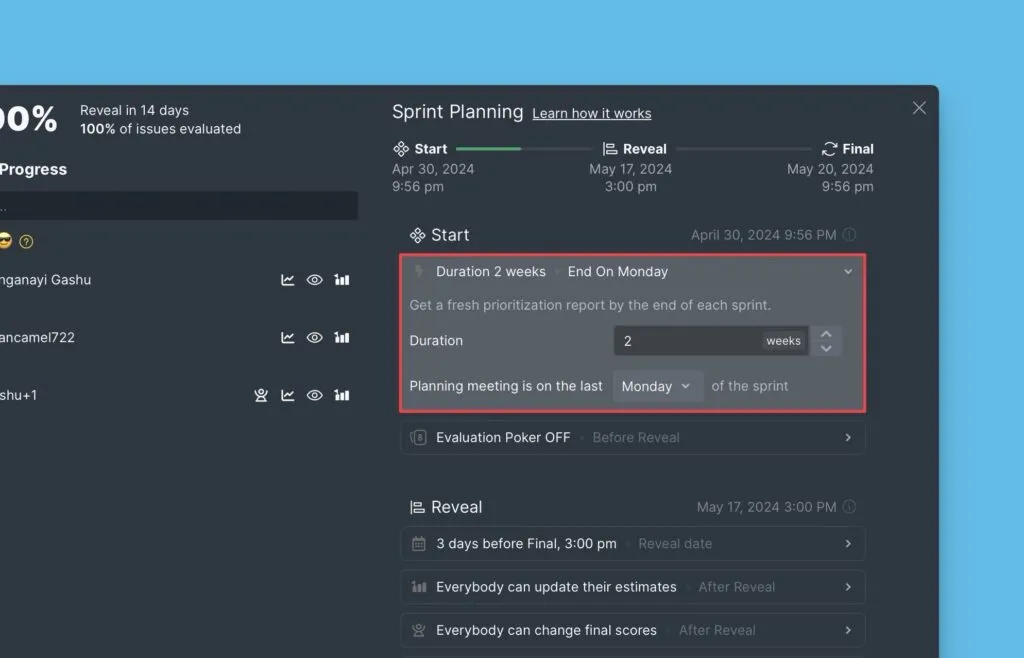
Puanlarınızın süresi dolmuşsa ve önceki PI'yi bitirmediyseniz, puanlarınızı her zaman geri yükleyebilir ve önceliklendirme süresini uzatabilirsiniz.
İşbirlikçi önceliklendirme
Agile tahmini bir takım sporudur. Her agile takımı beş ila on bir üyeden oluşur. Agile ekibinizi (çapraz fonksiyonel ekip) önceliklendirme sürecine davet edin.
Bir takım ürün iş listesini tahmin ettiğinde, her görev üzerinde kimin çalışacağını bilmezler. Takımlar bunu genellikle iterasyon planlaması (sprint) sırasında belirler.
Bu nedenle tüm agile takımı her ürün iş listesi öğesini değerlendirir.
Önyargıyı azaltın
Tüm takımın, tutarlı bir uygulamaya ulaşmak için hikaye puanlarının atanmasının ardındaki mantığı anlaması gerekir. Tüm takım üyeleri diğer takım üyelerinden etkilenmeden oy kullanır. Dışarıdan baskı veya yetersiz takım çalışması, hikaye puanlarını hızla şişirebilir ve tahminleri etkileyebilir.
Bazen önceliklendirme toplantıları odadaki en gürültülü kişi tarafından yönetilebilir. Bu, değerlendirme oturumu sırasında birbirinize müdahale edebileceğiniz anlamına gelir. Herkesin kendi hızında önceliklendirme yapmasına izin verin.
'Doğru Etkiyi' seçin
Makalenin başında iş etkisinden bahsettik. Ancak farklı rollere basit bir soru sorarsanız ne cevaplar alırsınız: "Sırada yapacağımız en etkili şey nedir?" Örneğin, bahse girerim bir geliştirici size "daha hızlı veritabanı" diyecek, bir satış elemanı "en büyük müşteri için bir özellik talebi" diyecek ve bir ürün yöneticisi "yeni elde tutma mesajı" isteyecek, vb.
Hangisinin daha etkili olduğunu karşılaştırmak neredeyse imkansızdır. Ancak, bu her agile takımı için dikkate alınması gereken iyi bir şeydir ve tam olarak Ducalis'nin sizin için yapabileceği şeydir.
Farklı görüşleri toplayın
Önceliklendirme çerçeveleri, duygular ve politikaları bir kararın dışında tutmak için harikadır, böylece bunun yerine gerçeklere güvenebilirsiniz. Ancak, yalnız önceliklendirdiğinizde, hala önyargılısınız. Önceliklendirme için poker planlama tekniğini ödünç alın. Ducalis ile her takım üyesini önceliklendirmeye davet edin.
Takım arkadaşlarını davet etmek için:
- Kriter ayarlarını açın.
- Takım arkadaşlarınızı paylaşılan değerlendirme ekibinize davet edin.
Bu, her takım arkadaşına bağımsız tahmin için kendi değerlendirme listesini sağlar.
Her rol için kriterleri belirleyin
Diyelim ki web siteniz için yeni bir özellik geliştirmeniz gerekiyor. En az üç rolünüz var—UX tasarımcısı, ön uç ve arka uç—hepsinin o özellik için farklı bir İş Boyutu var. UX, 3 günlük bir İş Boyutuna ihtiyaç duyar, ön uç bir güne ihtiyaç duyar ve arka uç beş güne ihtiyaç duyar. Toplam proje için İş Boyutu nedir?
Sorun hesaplama değil; ekibinizin bunu tartışmak için bir zaman aralığı bulması gerekir. Uzaktan öncelikli bir dünyada, bu bir Zoom araması ve tartışma anlamına gelir. İşin etrafında daha fazla iş.
Ducalis, asenkron bir önceliklendirme yaklaşımıyla bunu sizin için yapabilir.
Rollere göre kriter atamak için:
-
Kriter ayarlarını açın.
-
Her kullanıcıya uzmanlıklarına göre tahmin etmeleri için bir kriter atayın.
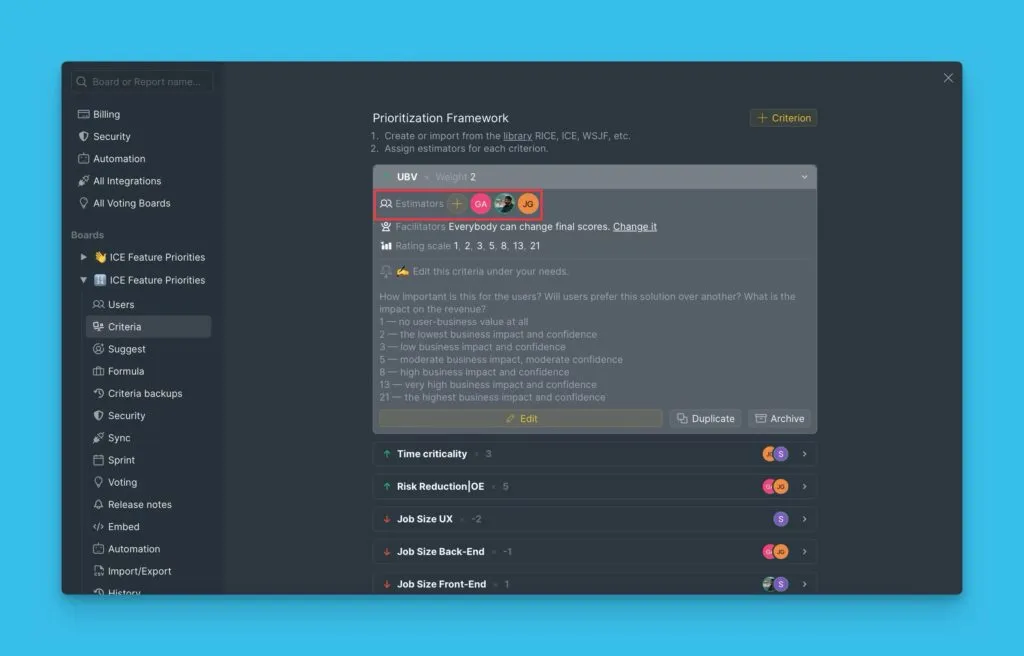
Bundan sonra, her takım üyesi iş listesi öğelerini tahmin etmekten sorumlu oldukları kriter setiyle değerlendirecektir.
Herkes katıldığında katılım artar
İşbirlikçi önceliklendirmenin yan etkisi, takım arkadaşlarının üründe neler olup bittiğini daha iyi anlamasıdır. Hangi zorluklar, talepler ve fikirlerimiz olduğunu ve bazılarının neden diğerlerinden daha önemli olduğunu biliyoruz. Bu, morali ve takım katılımını artırır.
Puanları normalleştirin
Düzenli uygulama yoluyla biraz normalleştirme gerçekleşir ve bu, ekipteki herkesin boyutlandırma arkasındaki aynı varsayımları yapmasını sağlamaya yardımcı olur. Örneğin, bir kişi bir öğeyi "2" olarak boyutlandırırsa, ancak başka bir kişi benzer yetenekleri paylaştıkları göz önüne alındığında onu "8" olarak boyutlandırırsa, gereksinimi farklı yorumlamışlar veya farklı yönlerden yaklaşmışlardır. Bu olduğunda, Geliştiriciler varsayımları netleştirmek ve bir boyut üzerinde anlaşmak için Ürün Sahibi ile işbirliği yapar. (Bunun bir fikir birliği olması gerekmez—insanlar aynı fikirde olmamayı kabul edebilir.)
Bir takım, Fibonacci ölçeğinin kendileri için ne anlama geldiğini öğrenirken, benzersiz beceri setleri, görev süresi ve alan bilgisiyle, paylaşılan benzerliklere sahip tamamlanmış çalışmayı yeni isteklerle karşılaştırmak faydalıdır. Örneğin, yeni bir öğeye 5'lik bir hikaye puanı değeri atandığında, onu aynı boyuta sahip benzer şeylerle karşılaştırın ve puanları buna göre ayarlayın.
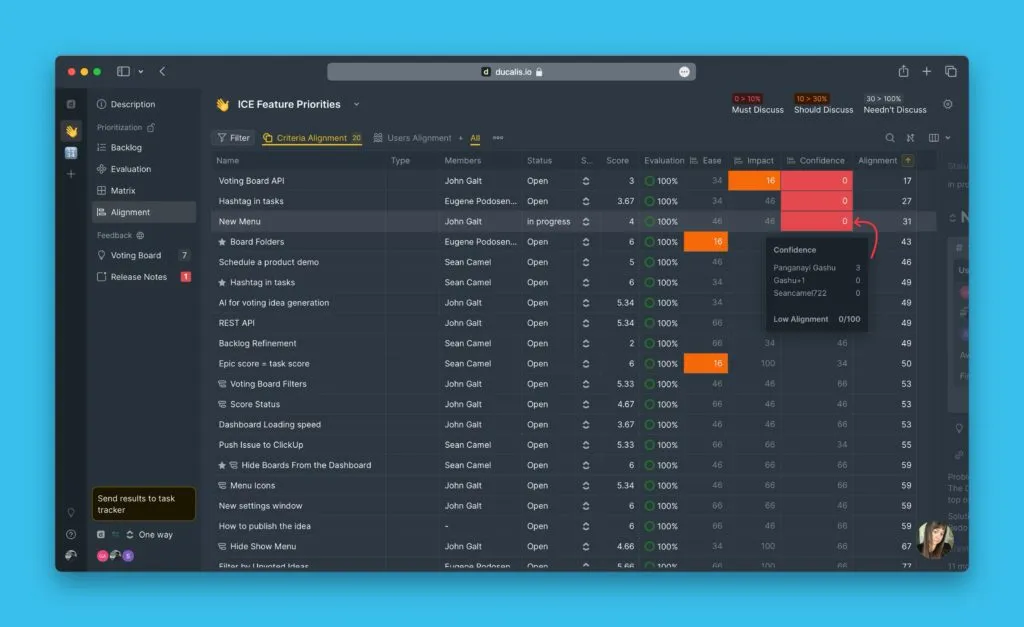
Ducalis ile, anlaşmazlıkların ısı haritasını almak için takım hizalanma raporunu hızlıca kontrol edebilirsiniz. Bu, poker planlama oturumu düzenlemek yerine asenkron önceliklendirme için başka bir araçtır; tahminlerin çoğunluğunun hiç tartışmaya ihtiyacı olmayacaktır.
Daha küçük parçalara bölün
WSJF hakkındaki en büyük yanlış anlamalardan biri, ekibinizi yalnızca kolay görevlere (düşük asılı meyveler) odaklayabileceğidir. Bunun yerine, belirli bir görev için İş Boyutu ne kadar küçükse, öncelik puanı o kadar yüksek olur ve görev o kadar yüksek sıralanır.
İş listenizi dilimlere ayırmak ve görevlerinizle ne yapacağınıza karar vermek için bir matris kullanın.
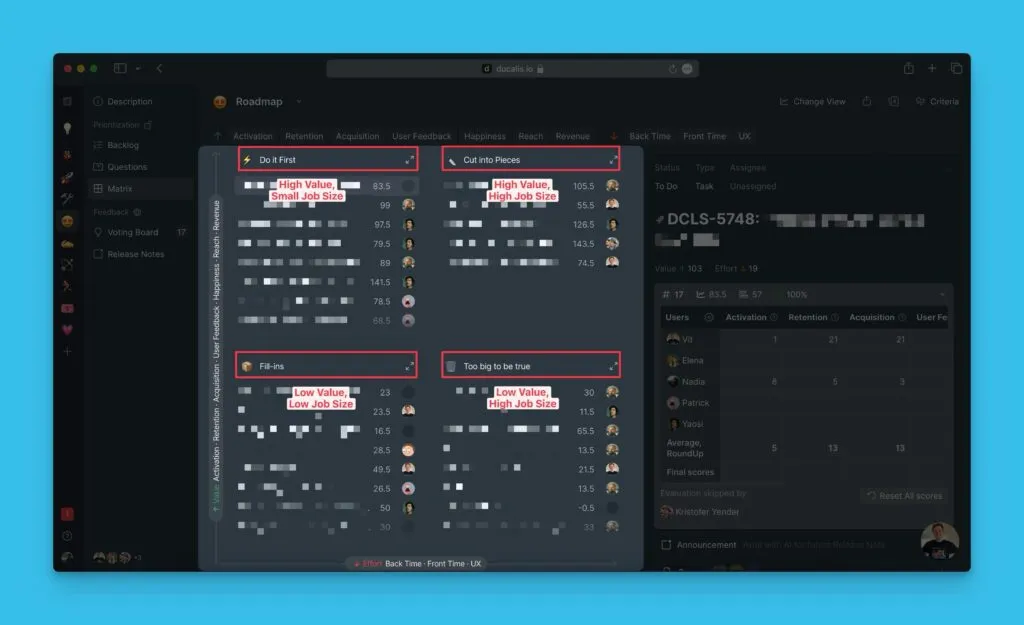
İyileştirme pratiği yoluyla—işi daha küçük, daha değerli parçalara bölmek—Geliştiriciler içgörü kazanmaya devam eder. Her istek küçüldükçe ve daha fazlası bilindiğinde, boyutu sürekli gözden geçirirler. Bu nedenle, ekibe ortaya çıkan tasarım, geliştirme ve bağımlılıklar konusunda yardımcı olmak için üç temas noktası sağlamak iyidir.
Pratik tavsiye
-
Çok kesin olmaya çalışmayın. Bir saatlik bir göreviniz varsa, temeli bir gün olarak ayarlamaktan korkmayın. Uzun vadede hepsi telafi edilecek ve dengelenecektir.
-
Tahminleri bir sonraki değere yuvarlayın.
-
Ancak, nihai karar, söz konusu iş listesindeki öğeleri sıralamaktan sorumlu ürün uzmanına aittir. Düzenleyici son tarihler, eski sistem kırılganlığı veya gelecekteki özellikler için bir temel oluşturma gibi faktörlerin finansal terimlere dönüştürülmesi zor olabilir, ancak yine de dikkate alınması gerekir.
İlgili kaynaklar
hi.ducalis.io, Scaled Agile Framework veya SAFe ile ilişkili değildir. Vizyonlarını ve manifestolarını https://www.scaledagileframework.com/ adresinde okuyun