Etki-Efor Matrisi Kılavuzu
Düşük asılan meyveleri belirleyin ve iş listenizi dört çeyreğe bölerek ROI'yi maksimize edin: Hızlı Kazanımlar, Büyük Projeler, Dolgu İşler ve Zaman Yiyiciler.
Etki-Efor Matrisi nedir?
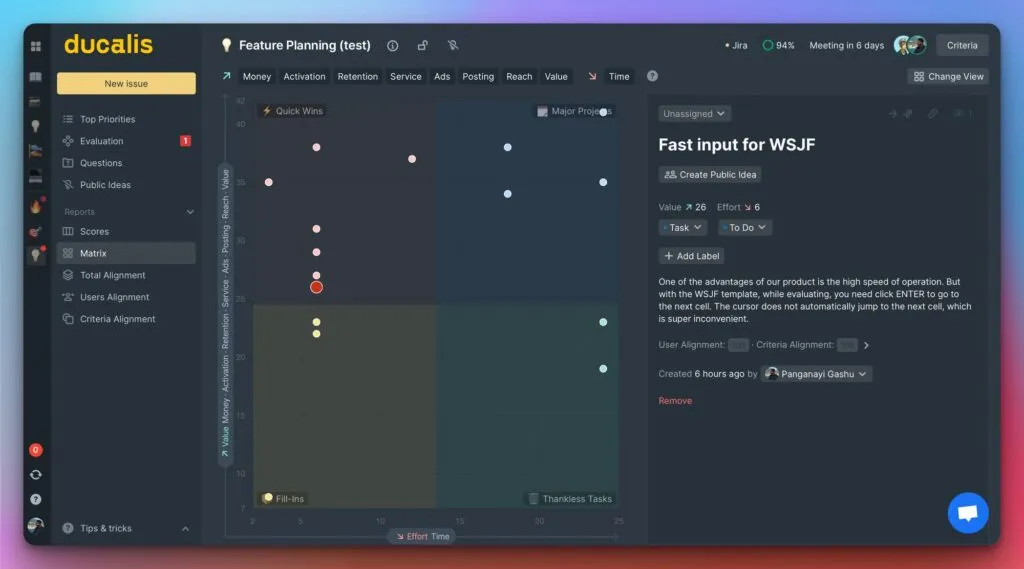
Etki-Efor Matrisi (Değer-Efor veya Değer-Karmaşıklık Matrisi olarak da bilinir), iş listenizi görev ROI'sine göre görsel olarak dört çeyreğe bölen yalın bir önceliklendirme aracıdır:
- Hızlı Kazanımlar — Yüksek etki, düşük efor. Minimum yatırımla maksimum fayda.
- Büyük Projeler — Yüksek etki, yüksek efor. Önemli kaynak gerektiren uzun vadeli getiriler.
- Dolgu İşler — Düşük etki, düşük efor. Uygulaması ucuz ancak fazla değer sağlamayan işler.
- Zaman Yiyiciler — Düşük etki, yüksek efor. Minimum fayda ile önemli yatırım gerektiren işler.
Etki-Efor Matrisini kimler kullanabilir?
Kişisel yapılacaklar listesinden karmaşık iş projelerine kadar herkes, görevleri önceliklendirmek ve verimliliği maksimize etmek için Etki-Efor Matrisini kullanabilir.
Etki-Efor Matrisi nasıl kullanılır
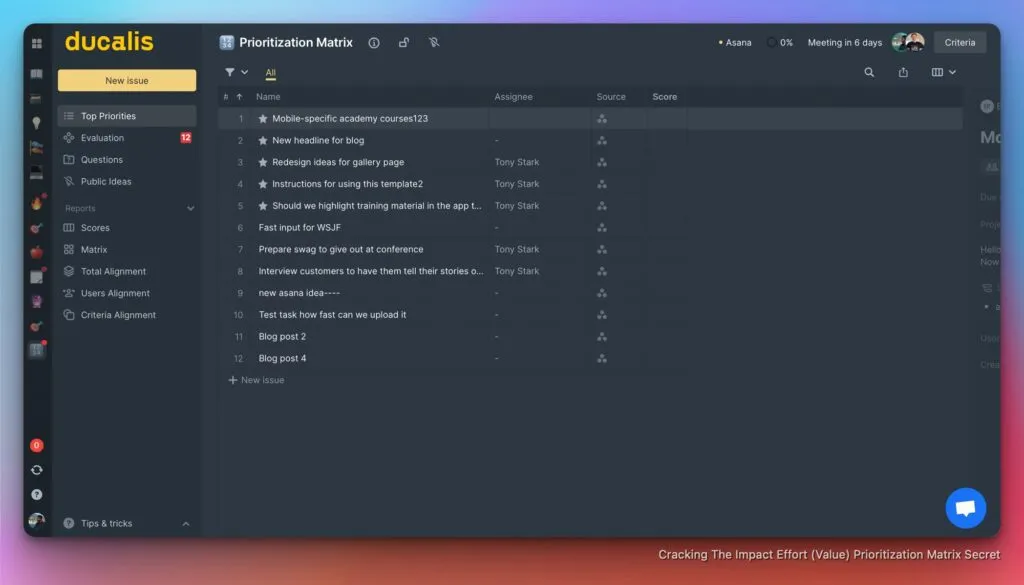
Görev listesi hazırlayın
Hangi iş listesinin önceliklendirilmesi gerektiğine karar verin. Görevleri şablona şu yollarla ekleyin:
- Görev takip sisteminden içe aktarma.
- Elektronik tablodan içe aktarma.
- Doğrudan şablonda yeni görevler oluşturma.
Takım olarak değerlendirin
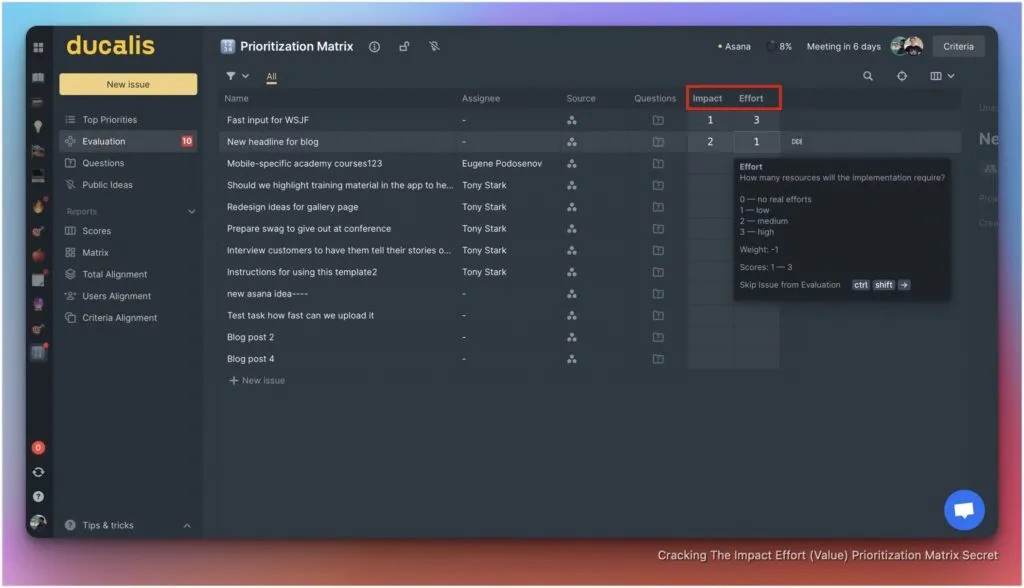
Her görev iki kriterde 0'dan 3'e kadar puanlanmalıdır: Etki ve Efor. En iyi sonuçlar, tüm takımla birlikte değerlendirme yaparak elde edilir.
Etki — Bu iş, ana iş hedefine ne kadar değer sağlıyor?
- 0 — Etki yok
- 1 — Düşük
- 2 — Orta
- 3 — Yüksek
Efor — Uygulama ne kadar kaynak gerektirir?
- 0 — Gerçek bir efor yok
- 1 — Düşük
- 2 — Orta
- 3 — Yüksek
Sonuçları inceleyin
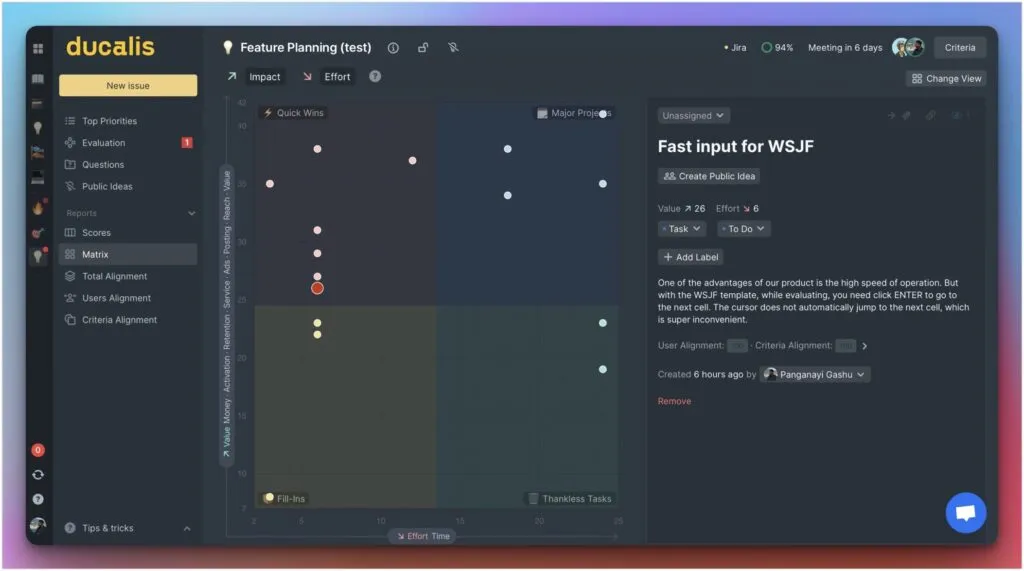
Değerlendirme sonrasında tüm görevler, puanlarına göre dört çeyreğe yerleştirilir:
- Hızlı Kazanımlar — Yüksek etki, düşük efor
- Büyük Projeler — Yüksek etki, yüksek efor
- Dolgu İşler — Düşük etki, düşük efor
- Nankör Görevler — Düşük etki, yüksek efor
Öncelikleri doğrulamak için sonuçları takımınızla tartışın. Takım tartışması ve hizalanması olmadan sonuçları uygulamayın.