Önceliklendirme Kaosunu Çözmek
Önceliklendirme sorunu özelliklerle ilgili değil—çarpışmalar, seçimler, uzlaşmalar ve çatışmalarla ilgili. Bu, önceliklendirme kaosuyla mücadele etme ve işleyen bir çerçeve oluşturma hikayemiz. Eğer size hitap ediyorsa, yaklaşımımızı denemeyi düşünün.
Önceliklendirme ve Takım Hizalanması Sorunu
CEO'lar bir özellik talep ediyor, rakipler başka bir özellik yayınlıyor, en büyük müşterileriniz başka bir şey istiyor, danışmanlar farklı öncelikler dayatıyor ve ürün ekibinizin kendi vizyonu var. Herhangi bir talebi kabul etmeden önce şunu sorun: Bu vizyona uyuyor mu? İleriye doğru bir adım mı? 5 yıl sonra önemli olacak mı?
Intercom'dan Des Traynor önceliklendirme hakkında
Hiten Shah, önceliklendirme sorunlarının KissMetrics'i mahvettiğini dürüstçe söyledi. Takıma "Hiten bombaları" atardı—yeni fikirler, yeni yönler, aklına gelen parlak şeyler. "İyi ya da kötü, fikirlerimden hiçbiri herhangi bir çerçeve veya filtreye dayanmıyordu. Kalçadan ateş ediyordum. Odaklanmamıza ve uygulamaya koymamıza yardımcı olduğumu düşünüyordum. Tamamen yanılmışım." Takım dağıldı ve her şeyi kaybettiler.
"Milyar Dolarlık Hatam" KissMetrics'ten Hiten Shah tarafından
Close.io'dan Steli Efti yakın zamanda uzak takımlarda aşırı iletişimin önemi hakkında bir yazı yazdı. Ekibinizin birbirleriyle iletişimde kalmasını sağlamalısınız, işi halletmek için gerekenden çok ötesinde. Herkes yalnızca Kimin Ne yaptığını değil, aynı zamanda Neden'i de bilmeli.
Linkedin gönderisi Close.io'dan Steli Efti tarafından
Gereksiz görevleri yerine getirmek en büyük şirket zamanı hırsızlığıdır.
RICE Nasıl Başarısız Oldu: Dahili Önceliklendirme Çerçevesi Oluşturmak
Aynı sorunlarla karşılaştık. Bazen farklı zaman dilimlerinden çalışan uzak bir takımda herkesi aynı sayfada tutmak zorludur. Müşteriler özellikler talep etti, yöneticiler fikirler sundu, geliştiricilerin kendi ürün vizyonları vardı. Kayıtların listesi hızla büyüyordu. Önemsiz görevler rastgele iş listesinden çekiliyor ve haber verilmeden geliştirmeye aktarılıyordu. Ürün yöneticileri sürekli "Bunu neden yapıyoruz ki? Öncelikler değişti!" diye soruyordu.
Bütün Jira Cloud kayıtlarımızı her hafta tartışmaya çalıştık. Önemli şeyleri Google Keep'te takip ettik. Süslü Jira Cloud eklentileri ekledik. Bunların hiçbiri yardımcı olmuyordu. Tam bir karmaşaydı.
Sebep: kayıtların önemini değerlendirmek için ortak nesnel kriterlerimiz yoktu. Her birimiz kendi çıkarlarını güdüyordu ve uzaktan çalışma her şeyi tam bir kaosa çeviriyordu. İşte o zaman mevcut önceliklendirme çerçevelerini denemeye karar verdik.
RICE Neden İşe Yaramadı
RICE Puanı ile başladık—ürün fikirlerini değerlendirmek için dört faktörlü bir önceliklendirme çerçevesi: Erişim, Etki, Güven ve Efor.

RICE önceliklendirme modeli
Ancak bizim için işe yaramadı. Takımlar Etki konusunda kafası karışmıştı. Herkesin neyin etkili olduğuna dair kendi resmi vardı. Bir kaydı para etkisi mi yoksa güvenilirlik etkisi için mi değerlendirmeliyiz?
Geliştiriciler kod yeniden düzenlemeyi ürün için çok önemli olarak görüyordu. Ancak yardım merkezi makale düzenini düzeltmek zaman kaybı gibi görünüyordu. Yöneticiler için ise tam tersi.
RICE ile ilgili en büyük sorun—her takım üyesinin şu anda tam olarak neyin etkili olduğunu aklında tutmasına yardımcı olmuyor.
RICE'ı Düzeltmek: Takımları Etki Konusunda Senkronize Etmek
Önceliklendirmeyi iyileştirmek bir araç veya çerçeve meselesi değil. Bozuk işbirliğini düzeltmekle ilgili. Neyin önemli olduğunu tartıştık ve değerlendirme kriterleri için bir gereksinimler listesi oluşturduk. Kriterler şunları yapmalı:
- Açık ve net olmalı
- İlgili şirket hedeflerini yansıtmalı
- İş, ürün, pazarlama ve geliştirme hedeflerini dikkate almalı
- Geliştiricilerin ve yöneticilerin bakış açılarını dikkate almalı
Günün sonunda şunların bir karışımıyla sonuçlandık:
Kuzey Yıldızı Metriği + RICE + AARRR + İş Acı Noktası:
- Satışlar. Para gelirini etkiler (AARRR'den Edinim)
- Aktivasyon. Kullanıcıların ürünün nasıl çalıştığını anlamalarına yardımcı olur (AARRR'den Aktivasyon)
- Elde Tutma. Kullanıcının ürünü tekrar kullanma motivasyonunu artırır (AARRR'den Elde Tutma)
- Hizmet. Kalite kaybı olmadan müşteri desteğine daha az zaman harcamamıza yardımcı olur (Bizim İş Acı Noktamız)
- FB Reklamları. Bir kullanıcının ürünümüz aracılığıyla başlattığı Facebook Reklamlarının miktarını artırır. Facebook Marketing Partnership için önemli (Ürün Kuzey Yıldızı Metriği)
- Zaman. Geliştirmeye harcanan zaman, karmaşıklık (RICE'dan Efor)
- Kütle. Kaç müşteriyi, ürün birimini veya ne kadar parayı bu özellik etkileyecek (RICE'dan Erişim)
Değerlendirme sürecini basitleştirmek için ağırlıklı puanlama modeli ödünç aldık: farklı kriterlere farklı göreceli ağırlıklar atanır. Örneğin, geliştirmeye harcanan zaman -3 çarpanına sahip olmalı çünkü hızlı kazançlar bulmayı tercih ediyoruz.
Her kritere 0'dan 3'e kadar bir puan veriyorsunuz:
- 3 — olmalı
- 2 — olması gerekir
- 1 — olabilir
- 0 — olmayacak
Jira Cloud + Google Sheets: Evlilik ve Boşanma
Sonra, hepsini bir araya getirmemiz gerekiyordu. Birçokları gibi, Google Sheets ile başladık. Automate.io, Jira Cloud'dan veri çekmeye yardımcı oldu. Hesaplamalar için veritabanı olarak 5 sayfa. Sonuçlar ilk birkaç hafta harikaydı.
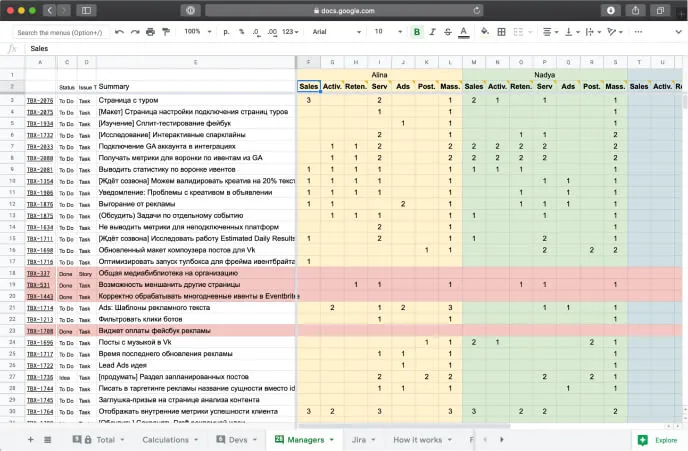
Google Sheets, Jira Cloud ve Automate.io ile oluşturulan ağırlıklı önceliklendirme çerçevemizin ilk versiyonu
Ancak iki ay içinde parlak yeni önceliklendirme sistemimiz bir sürü sorunla birlikte dev ve yavaş bir dosya haline geldi:
- Kayıt içe aktarımı sürekli çöküyordu
- Çok sayıda yinelenen veri satırı
- Esnek olmayan hesaplama
- Kayıt bağlamını okumak için düzinelerce tarayıcı sekmesi
- Takım genellikle yeni kayıtları değerlendirmeyi unutuyordu
Ekip arkadaşlarımızdan biri elektronik tablo yöneticisi oldu. Görevi sürekli elektronik tabloyu düzeltmekti.
Günün sonunda, takım kimsenin zaman harcamak istemediği sıkıcı bir rutinden bıkmıştı.
Hızlı Önceliklendirme İçin Kendi Aracımızı Oluşturmak
Sonunda, ölü atı dövmeyi bırakmaya ve kendi aracımızı oluşturmaya karar verdik.
Arayüzü olabildiğince hızlı ve basit yapmaya çalıştık. Ducalis olağan elektronik tablolara benziyor, sadece formüller parçalanmıyor. Ve tarayıcı sekmeleri arasında geçiş yapmanıza gerek yok—puanları atarsınız, kayıt bağlamını okursunuz ve kriter açıklamalarını tek bir ekranda görürsünüz.
Kayıtlar gerçek zamanlı olarak senkronize edilir. Kriter açıklamaları açılır pencerelerde görünür—bunları hatırlamanıza veya ayrı bir belgeye geçmenize gerek yok. Bir şeyi değiştirirseniz hesaplama formülü bozulmayacak ve puanlar kaybolmayacak. Tüm takım aynı anda puan verebilir. Ducalis donmaz ve arayüz süper hızlı çalışır. Ellerinizi klavyeden çekmeden birkaç dakika içinde düzinelerce kaydı değerlendirebilirsiniz.

Son derece hızlı arayüz, kısayol tuşları, odak modu, vb.
Takım Önceliklerinin Kuşbakışı Görünümü
Değerlendirmeden sonra, puanlar hesaplanır ve kayıtlar iş listesinde otomatik olarak sıralanır. En önemli proje görevlerinin genel resmini hızla görebilirsiniz. Kayıt durumu, sprint, öncelik ve açıklama gibi tüm gerekli ayrıntılar tek bir ekranda.
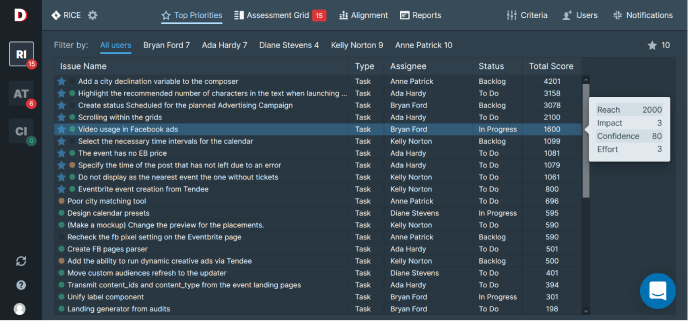
Takımın en önemli önceliklerinin kuşbakışı görünümü
Her Proje Benzersizdir
Sonra, farklı projeleri değerlendirmek için Ducalis panoları kullanmaya başladık—iki ürün geliştirme panosu ve bir pazarlama planı panosu. Bir pano, Ne'nin (kayıtlar ve görevler), Kim'in (ekip arkadaşları) ve Nasıl'ın (kriterler) bir kombinasyonudur.
Aynı yaklaşımı birçok alanda uygulayabileceğimizi fark ettik:
- Özellik talepleri
- Hata düzeltme
- Pazarlama görevleri
- İçerik fikirleri

Üç Ducalis panosu kullanıyoruz—iki özellik fikirleri için ve biri pazarlama görevleri için
Ezici Şekilde Olumlu Sonuçlar
- Görevleri haftalık olarak sıralarsanız tüm süreç sadece 15-20 dakika sürer
- Ekibinizin önceliğinin ne olduğunu ve ne olmadığını görebilirsiniz
- İş listesi kayıtları belirli yöneticiler tarafından değil, tüm ekip tarafından değerlendirilir
- Herhangi bir sayıda kullanıcı aynı anda değerlendirme yapabilir
- Ayarlar her zaman yapılandırılabilir: veri kaybı olmadan kullanıcılar ve kriterler ekleyebilir/kaldırabilirsiniz
- Sekme değiştirmeye gerek yok: kayıt bağlamı ve kriter açıklamaları tek bir ekranda
- Gerçek zamanlı senkronizasyon—kayıt izleyicide değişirse, Ducalis'de değişir
- Slack ve e-posta bildirimleri ekibe değerlendirmeyi hatırlatır ve güçlü bir alışkanlık oluşturur
- Tüm ekip şirketin hedeflerini ve önceliklerini anlar
Ducalis iş akışı hakkında daha fazla ayrıntıyı burada okuyabilirsiniz.
İş listesine baktıklarında ekibe sihir yapar—yalnızca neyin önemli olduğunu görmekle kalmaz, aynı zamanda nedenini de anlarlar. Evet, herkes görevleri farklı algılar. Ama bu harika bir bonus çünkü çeşitli görüşleri toplarsınız.
Uzun ve sancılı bir yoldan geldik. Bir yıl boyunca Ducalis kullandıktan sonra, Google Sheets'in işbirlikçi önceliklendirme için uygun olmadığı sonucuna vardık. Tek uygulanabilir çözüm, bunları özel bir araçla değiştirmektir.
İlk Kullanıcıların Referansları
16 Mart 2020'de başlattık. Başvuru sayısı hayal edebileceğimizden on kat daha fazla çıktı. Elektronik tablo önceliklendirme artık tedavi edilebilecek ortak bir acıydı.
İlk testlerden sonra aldığımız geri bildirimler
İş listesi düzenleme için en iyi araç.
Harika bir şey! Özellikle, puanlama süresinin dolmasını seviyorum.
Gördüğüm anda bildim—buna ihtiyacımız var.
Bu konuya farklı açılardan yaklaştım ve şimdiye kadarki en iyi çözüm gibi görünüyor.
Ben ve diğer meslektaşım 80 özelliği değerlendirmek için toplamda yaklaşık iki buçuk saat harcadık. Bu hızlı.
Ducalis hazır bir iş akışı.
Tüm ekibin nereye gittiğimizi anlamasına yardımcı olur.